
Problem: Many mechanical HVAC design engineers find themselves responsible for smoke control systems—yet often feel a vague cloud of uncertainty around how to design them confidently. This uncertainty usually stems from an over-reliance on FLS consultants to clarify the fire and life safety objectives and performance criteria of these systems. This post offers a focused, practical approach for closing that small but important knowledge gap.
Solution: HVAC engineers can become more confident in smoke control design by learning the fire and life safety objectives and assumptions behind these systems, obtaining the go-to smoke control design resources, and following a structured self-study path.
To all HVAC design engineers: If you’ve ever felt unsure discussing the details of your stairwell pressurization or atrium smoke exhaust systems with a life safety consultant or AHJ, you’re not alone. This guide walks you through why that gap may exist and two steps to help close it.
Where HVAC Engineers Feel Uncertain in Smoke Control Design
Mechanical engineers already manage a wide range of technical systems—air-side systems, hydronic systems, duct layouts, controls, ventilation strategies, energy efficiency, plumbing, and so on. But when it comes to mechanical smoke control systems, there’s often hesitation.
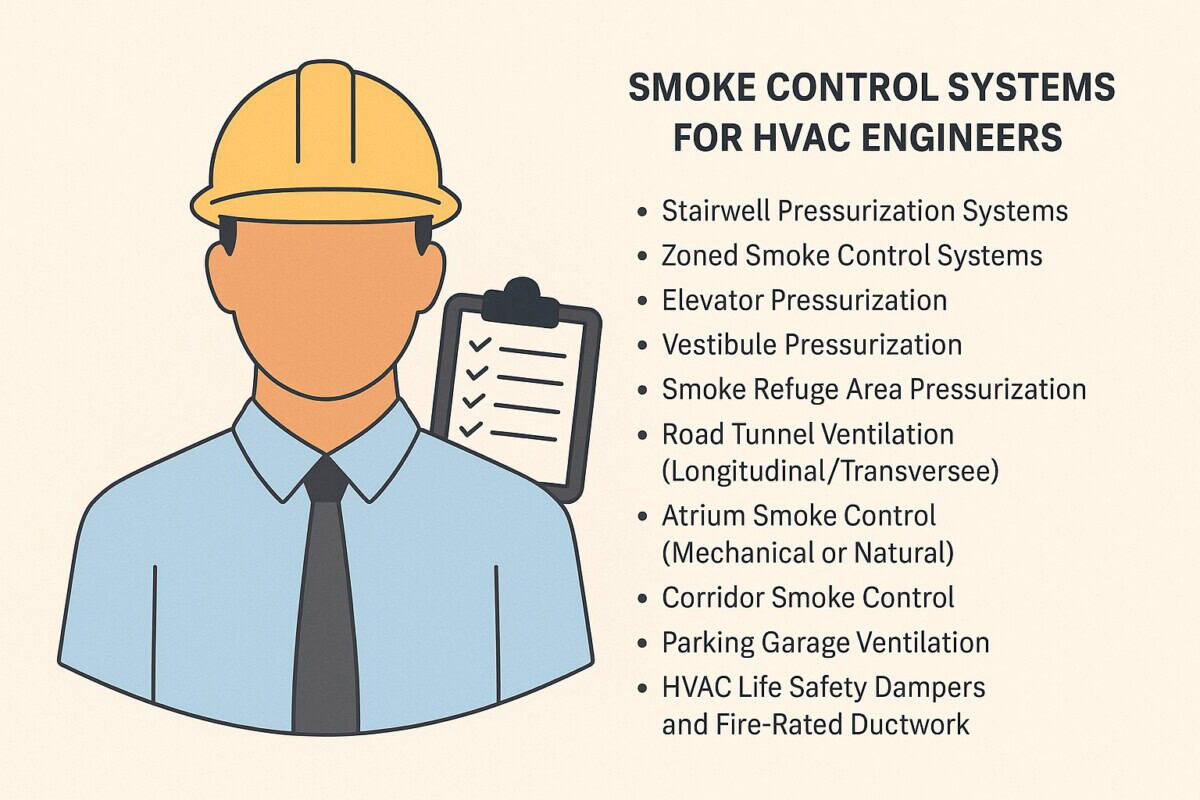
Here are some smoke control systems HVAC design engineers are typically asked to design, approve, stamp, and defend to the AHJ:
- Stairwell Pressurization Systems
- Zoned Smoke Control Systems (such as in hospitals)
- Elevator Pressurization
- Vestibule Pressurization
- Smoke Refuge Area Pressurization
- Road Tunnel Emergency Ventilation (Longitudinal/Transverse)
- Atrium Smoke Control
- Corridor Smoke Control
- Parking Garage Smoke Ventilation
- HVAC Life Safety Dampers and Fire-Rated Ductwork
What HVAC engineers have mentioned is that they often feel overly dependent on the FLS consultant for guidance and final decisions on their smoke control system designs. While collaboration is always a good idea—especially when anticipating AHJ perspectives—it’s also valuable to approach smoke control designs with a clear understanding of the life safety intent behind each system.
Typical Smoke Control Knowledge Gaps for HVAC Engineers
Mechanical HVAC engineers are well-versed in airflow design and equipment but often lack exposure to the life safety principles that underpin smoke control systems. The most common knowledge gaps include:
- Fire Dynamics, Design Fires, and Smoke Behavior: While HVAC engineers understand airflow, they may not be familiar with how smoke behaves in a fire, how design fires are determined, and how smoke dynamics affect safety.
- Fundamental Objectives of Smoke Control Systems: Mechanical engineers may not fully grasp the primary life safety objectives behind smoke control systems.
- Fire and Life Safety Fundamentals: Smoke control systems need to be designed with a life safety mindset, including considerations for egress, occupant protection, and assisting first responders during a fire. None of which are engrained in a typical HVAC engineer’s daily thought process.
- Performance-Based Design Methodology: Many HVAC engineers are familiar with prescriptive codes but may not be experienced with the more flexible, yet complex, performance-based design approaches that are becoming increasingly popular in smoke control engineering.
You don’t need to become a fire protection engineer. But gaining a practical understanding of how smoke behaves, what each system is trying to accomplish, and where mechanical design intersects with life safety is empowering.
Action Step 1: Learn the Role of FLS in the Building Industry
Start by orienting yourself to the fire and life safety engineering profession. You’re not aiming to change careers—just to understand the broader context of where smoke control fits in.
These resources offer useful insight:
- NFPA: https://www.nfpa.org/for-professionals/career-growth/fire-protection-engineer

- SFPE: https://www.sfpe.org/advocacy-qualifications/core-competencies/fperoles
- NFPA: https://www.nfpa.org/about-nfpa/nfpa-fire-and-life-safety-ecosystem
Action Step 2: Follow a Self-Study Path to Fill the Gap in Smoke Control Knowledge
This step is where the real momentum comes from. I’ve outlined a self-paced study plan specifically for engineers like you who already understand the airflow and equipment aspects but want to grasp the life safety reasoning behind mechanical smoke control systems.
Topics for the smoke control self-study path include:
- Fire dynamics and smoke behavior
- Design fires and tenability
- Smoke control objectives (egress support, firefighter safety, containment)
- System types and typical use cases
- Testing and commissioning fundamentals
Check out the post below:
Optional Action Steps: For Engineers Eager to Broaden Further in FLS
Some engineers find themselves increasingly drawn to the fire and life safety discipline as they explore smoke control. If you’re interested in going deeper, these credentials can help position you within the broader FLS field.
- NCEES – Fundamentals of Engineering (FE) Exam
- Your entry point to PE licensure, often a prerequisite.
- NCEES Site: FE Exam Information
- My Post: Fundamentals of Engineering (FE) Exam: 10 Steps to Study and Pass – NoonFire Blog
- NFPA – Certified Fire Protection Specialist (CFPS)
- Validates your knowledge of fire protection principles; recognized across the industry.
- NFPA Site: CFPS Information
- My Post: NFPA CFPS Exam: How to Self-Study and Pass in 21 Weeks – NoonFire Blog
- NCEES – Principles of Engineering (PE) Exam – Fire Protection Discipline
- For those looking to formally enter FLS engineering roles.
- NCEES Site: PE Exam Information
- My Post: Step-by-Step Guide: How I Passed the PE Exam in Fire Protection – NoonFire Blog
- Online Master’s Degree in Fire Protection Engineering
- Ideal for engineers pursuing research, academia, or highly specialized consulting roles.
- Part-time study is possible while working.
- It’s advisable to request financial support from your company for tuition.
These aren’t necessary to be effective in your HVAC design role—but they’re available if you’re curious or ambitious.
Conclusion: You Don’t Need to Lead the Smoke Control Industry—Just Fill the Gap
You already have a solid grasp of airflow, pressure, and system control. By understanding the life safety objectives behind smoke control systems, you can bring more clarity to your designs, collaborate more effectively with fire protection teams, and feel more confident in your decisions.
Start with awareness. Follow up with focused learning. And if it resonates—go further. But even a modest step into smoke control can make your work more impactful and respected.
Click this link to subscribe to the NoonFire Blog newsletter to stay updated with my latest insights, tools, and educational resources in smoke control engineering.
Click this link to follow NoonFire Blog on LinkedIn to stay informed and advance your understanding of this evolving field of smoke control engineering. Don’t miss out on content designed to enhance your knowledge and career growth.
Recent Posts
Step-by-Step Guide: How I Passed the PE Exam in Mechanical HVAC and Refrigeration
In this post, I walk you through the exact steps I took to pass the Principles and Practice of Engineering (PE) Exam in Mechanical (HVAC and Refrigeration) on my first attempt. My goal is to offer...
Step-by-Step Guide: How I Passed the PE Exam in Fire Protection
In this post, I walk you through the exact steps I took—based on my personal experience—to pass the Principles and Practice of Engineering (PE) Exam in Fire Protection on my first attempt. My...