

In this post, I walk you through the exact steps I took to pass the Principles and Practice of Engineering (PE) Exam in Mechanical (HVAC and Refrigeration) on my first attempt. My goal is to offer honest, practical insight—based entirely on my own experience—that might help others feel more confident and prepared as they start their journey toward licensure.
Before I specialized in fire and life safety engineering, my foundation was in mechanical systems. HVAC design, energy modeling, and mechanical project work were my day-to-day responsibilities early in my career. So pursuing the Mechanical PE Exam was a natural step. I wanted to back up my experience with formal credentials—and to be eligible for engineering roles that require licensure.
Later on, I pursued the Fire Protection PE as well, but my first exposure to the PE exam process came through the HVAC & Refrigeration discipline. The process taught me a lot—not just about content, but about time management, mindset, and how to structure effective long-term study.
What follows is the exact approach I used, broken down step-by-step. You can use this as a framework for your own preparation, adjusting it to fit your learning style and schedule.
Check out my YouTube video on this topic:
Step 1: Apply & Meet Prerequisites
Before anything else, make sure you’re eligible for the Mechanical PE Exam under your state’s board requirements. These typically include a combination of accredited education, qualifying engineering experience, and passing the Fundamentals of Engineering (FE) Exam.
Check out my previous post on passing the FE Exam:
Also, apply early. Although the Mechanical PE Exam is offered year-round at Pearson VUE testing centers, available dates and locations can still fill up, especially in busy metro areas. Securing your preferred test center early reduces unnecessary travel stress on exam day.
Step 2: Understand the Exam Format
The Mechanical PE Exam is offered year-round as a computer-based test. The total appointment time is 9 hours, which includes an 10-minute introduction, an 8-hour active exam time, and a scheduled 50-minute break. There are 80 questions in total.
I found it helpful to think of it in terms of time management: roughly six minutes per question. Knowing that early on gave me a mental model for pacing.
Review the NCEES Examinee Guide and the Exam Specifications—these are two separate documents that provide important information about exam logistics, structure, and the topics covered. They also outline what to expect at the testing center, permitted items, and exam-day procedures.
Exam Topic Breakdown Here is the exam topic breakdown for the HVAC and Refrigeration discipline of the Mechanical PE Exam. These are the main categories along with the expected number of questions and percentage range out of the 80 total questions:
| Topic Area | Number of Questions of 85 | Percentage Range |
|---|---|---|
| HVAC Loads and Psychrometrics | 18–27 | 22.5% – 33.75% |
| HVAC and Refrigeration Distribution and Systems | 20–30 | 25% – 37.5% |
| HVAC Equipment and Components | 24–36 | 30% – 45% |
| Supportive Knowledge (HVAC and Refrigeration) | 8–12 | 10% – 15% |
Pass Rate Statistics Based on recent NCEES data from a 6-month sample in 2025:
- Total first-time takers (Mechanical: HVAC and Refrigeration): 678
- Pass rate for first-time takers: 75%
- Total repeat takers: 173
- Pass rate for repeat takers: 50%
These numbers highlight the importance of solid preparation the first time around. While the pass rate for first-time test takers is encouraging, the drop for repeat takers shows that many who were not prepared for the first attempt were also not prepared for the repeat attempt.
Step 3: Choose Your Study Path
This is a major decision. Some engineers self-study using only free or low-cost resources, but I opted for structure. I used the PPI Mechanical PE Exam Prep Course, and it was one of the best decisions I made.
The course provided a weekly schedule, problem sets, and access to instructors. Yes, it was an investment, but the structured approach and practice problems were essential for me. Many companies reimburse study expenses, so check with your employer before enrolling.
Step 4: Get Two Approved Calculators
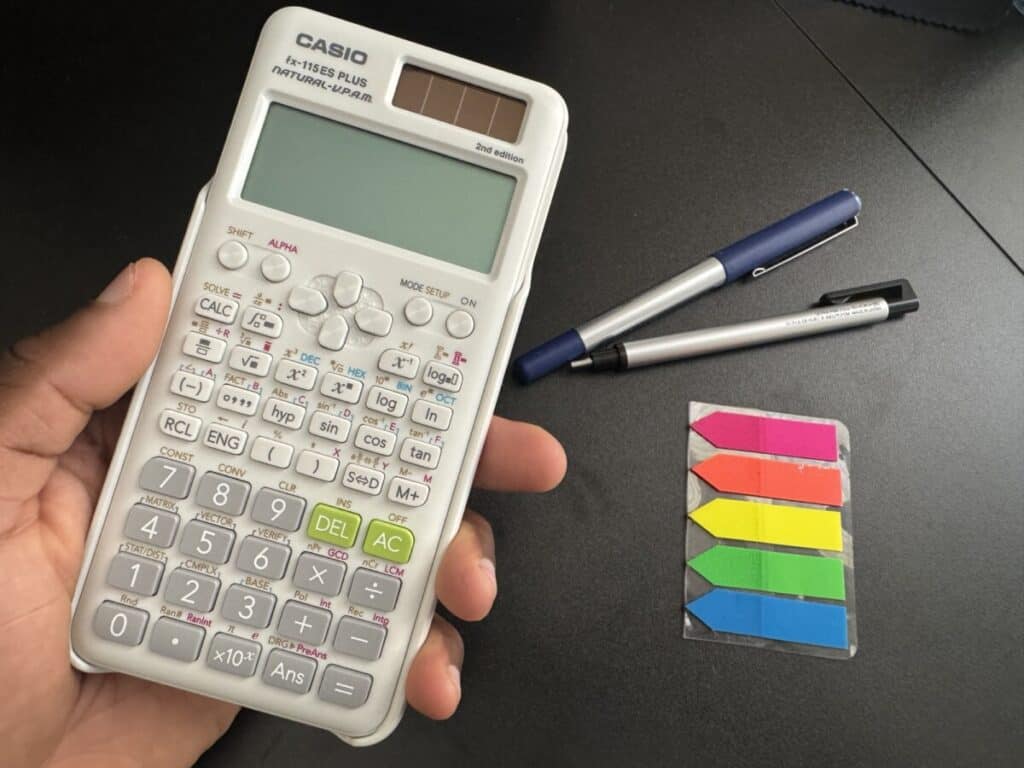
NCEES permits only specific calculator models. I bought two identical ones—one for daily use and one backup for exam day. I used the Casio FX-115ES PLUS, and I appreciated its natural display and user-friendly interface.
Having a backup reduces anxiety about batteries or malfunctions. It’s a small cost for big peace of mind.
Step 5: Use the NCEES Reference Manual Every Study Session
The NCEES Mechanical Reference Handbook is the only reference allowed during the exam. I treated it like a textbook and used it during every practice session.
I also recommend reading it cover to cover to help form a mental map of where things were. Knowing the layout of tables, constants, and equations saves time during the test.
Step 6: Treat Lectures as Entry Points, then Prioritize Self-Study and Practice
This is an area where I made a mistake for my HVAC PE exam. I over-relied on lectures, rewatching them multiple times thinking that would improve retention. In reality, that passive approach didn’t translate well to exam performance. Looking back, I wish I had treated lectures only as starting points—just enough to get oriented.
I also spent too much time reading and not enough time solving problems early in my prep. When I finally started doing real practice questions under exam-like conditions, it was a wake-up call.
Thankfully, I still passed on my first attempt. But if I could do it again, I’d integrate mini timed problem sessions much earlier—short 10-question sets under strict time limits using only the reference manual. That would have helped build both content familiarity and mental endurance over time.
Thus, for your self-study time I recommend following a general 50/50 ratio: half background reading and half active problem-solving. That balance is where the real learning happened.
Step 7: Study All Exam Topics, Even Weak Areas
The HVAC exam covers a wide range of topics—thermodynamics, psychrometrics, refrigeration cycles, load calculations, codes, and controls. You can’t afford to skip any category.
Some questions may be surface-level, but you still need basic familiarity across the board to pick up easy points.
Step 8: Stick to a Long-Term and Consistent Schedule
I studied for about 8 months, roughly 8–12 hours per week. I used a calendar to block out study time, and I protected those hours like appointments.
Pomodoro sessions (25 min focus, 5 min break) kept me sharp without burnout.
Step 9: Adopt a “Career-Applicability” Mindset When Studying
This helped me stay motivated. I wasn’t just studying to pass a test—I was building knowledge that applied directly to HVAC system design and analysis. That mindset turned study time into career development.
Step 10: Switch to Practice-Focus 6–8 Weeks Out
Here’s where I made another key mistake: I didn’t start doing time practice questions until the last four weeks – and did not do my first full practice exam until 2 weeks before the real test. That’s too late.
I recommend focusing more on small, timed practice sessions much earlier—even months before the exam. Mini exams (10–20 questions, strictly timed, only using the reference manual) help build the transition from passive study to active application under time pressure.
I also recommend taking the official NCEES practice PE exam for mechanical HVAC and refrigeration at least 4 to 6 weeks before the exam. You can find the official NCEES practice exam on the NCEES website. This is the single best source of realistic practice problems that you can get.
Waiting too long to shift from reading to doing made that final month more stressful than it needed to be. So while I absolutely recommend going practice-heavy near the end, I also strongly advise mixing in regular, realistic problem-solving under exam conditions throughout your entire study timeline.
Step 11: Prepare Physically in the Final Days
Sleep, hydration, nutrition—they matter. I tapered off heavy studying a few days before and focused on staying rested and alert.
The days before the exam, I also reduce my caffeine intake to get out of the stimulation-crash dependency cycle. That way when I did take caffeine on exam day, it was a real boost. 
Step 12: Set Yourself Up for Exam Day
I dressed comfortably and arrived early at the testing center. A calm morning routine helped reduce stress. I ate a balanced breakfast and avoided anything that could upset my stomach.
You only get one break during the exam, so plan your meals and fluids accordingly.
Step 13: Use the 3-Pass Strategy During the Exam
This approach saved me. First pass: answer what you know quickly. Second pass: tackle medium-difficulty questions. Third pass: return to the toughest ones.
It kept me from getting bogged down and preserved my confidence and pacing throughout.
Step 14: Wait for Exam Results
Results usually post within 7–10 days. I checked my NCEES portal every morning that week until the results came in. It’s nerve-wracking, but try to stay patient.
Step 15: Celebrate and Look Forward
After the exam, take time to celebrate with loved ones and thank anyone who supported you during the process. In states like Maryland, passing the PE exam means immediate licensure, while in others, additional steps may follow—but the hard part is behind you.
This is a natural time to explore promotions, salary increases, or new roles that were previously out of reach.
It’s also important to revisit your professional responsibilities as a licensed engineer, including ethics, continuing education, and renewal requirements.
And above all, stay humble. Passing the PE means you’re proficient, not all-knowing. Great engineers keep learning, ask questions, and know when to say, “I’ll look into that.”
Summary Checklist
- ✔️ Applied early and confirmed eligibility
- ✔️ Mapped out the exam format
- ✔️ Used a structured course (PPI) for guidance
- ✔️ Bought two NCEES-approved calculators
- ✔️ Studied with the NCEES manual every session
- ✔️ Balanced lectures, reading, and practice problems
- ✔️ Covered all exam topics thoroughly
- ✔️ Dedicated 250–350 hours over 6–8 months
- ✔️ Stayed motivated by connecting study to career
- ✔️ Shifted to practice-focus near the end
- ✔️ Prioritized rest and routine before the exam
- ✔️ Arrived early and stayed focused on test day
- ✔️ Used the 3-Pass Strategy to manage time and stress
- ✔️ Watched for results within 10 days
- ✔️ Celebrated and evaluated career growth opportunities
I hope this breakdown encourages anyone preparing for the Mechanical PE Exam. With the right plan and mindset, it’s absolutely achievable.
Recent Posts
Problem: Many mechanical HVAC design engineers find themselves responsible for smoke control systems—yet often feel a vague cloud of uncertainty around how to design them confidently. This...
Step-by-Step Guide: How I Passed the PE Exam in Fire Protection
In this post, I walk you through the exact steps I took—based on my personal experience—to pass the Principles and Practice of Engineering (PE) Exam in Fire Protection on my first attempt. My...